
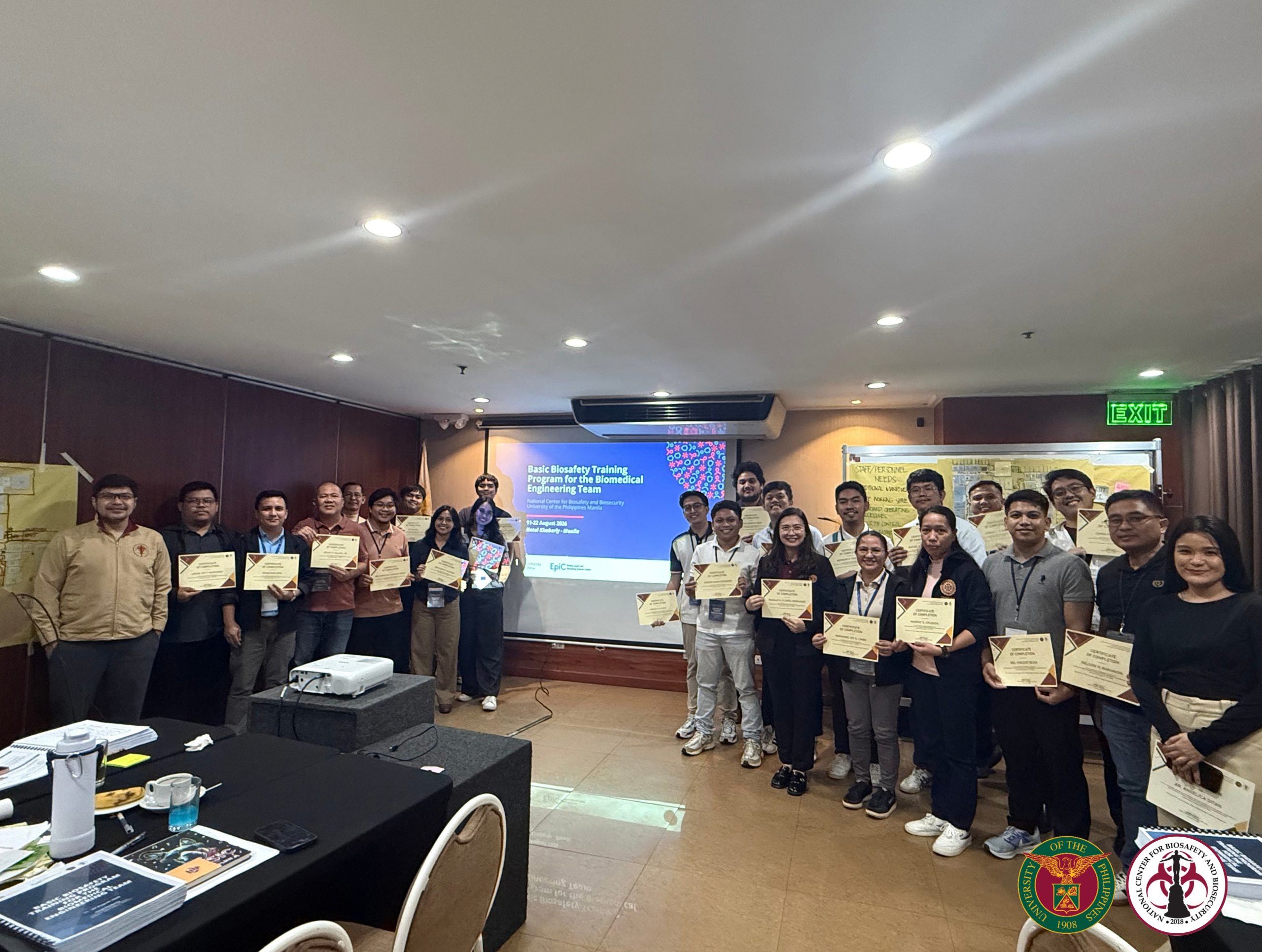
In partnership with the EpiC Global Health Security (EpiC-GHS) Project, with FHI 360 serving as the prime contractor, the National Center for Biosafety and Biosecurity (NCBB) successfully conducted the Biomedical Engineering Facility Team Training from August 11–22, 2026, at Hotel Kimberly Manila. The 10-day training brought together biomedical engineers, engineers, and architects involved in the planning, design, operation, maintenance, and management of laboratory and health facility infrastructure.
The training was attended by 21 participants nominated by the Department of Health (DOH), representing various DOH offices and health institutions, including the DOH Centers for Health Development (CHDs), DOH Health Facility Development Bureau – Office for Health Laboratories (HFDB-OHL), National Children’s Hospital, Jose B. Lingad Memorial General Hospital, Dr. Paulino J. Garcia Memorial Research and Medical Center, and East Avenue Medical Center. Participants from the Department of Agriculture – National Meat Inspection Service (DA-NMIS) and the University of the Philippines Manila – Campus Planning, Development and Maintenance Office (UPM-CPDMO) were invited to participate in the training. The training also included a representative from EpiC-GHS. The participants included professionals with responsibilities related to health facility planning and design, engineering systems, laboratory infrastructure, facility operations, and maintenance.
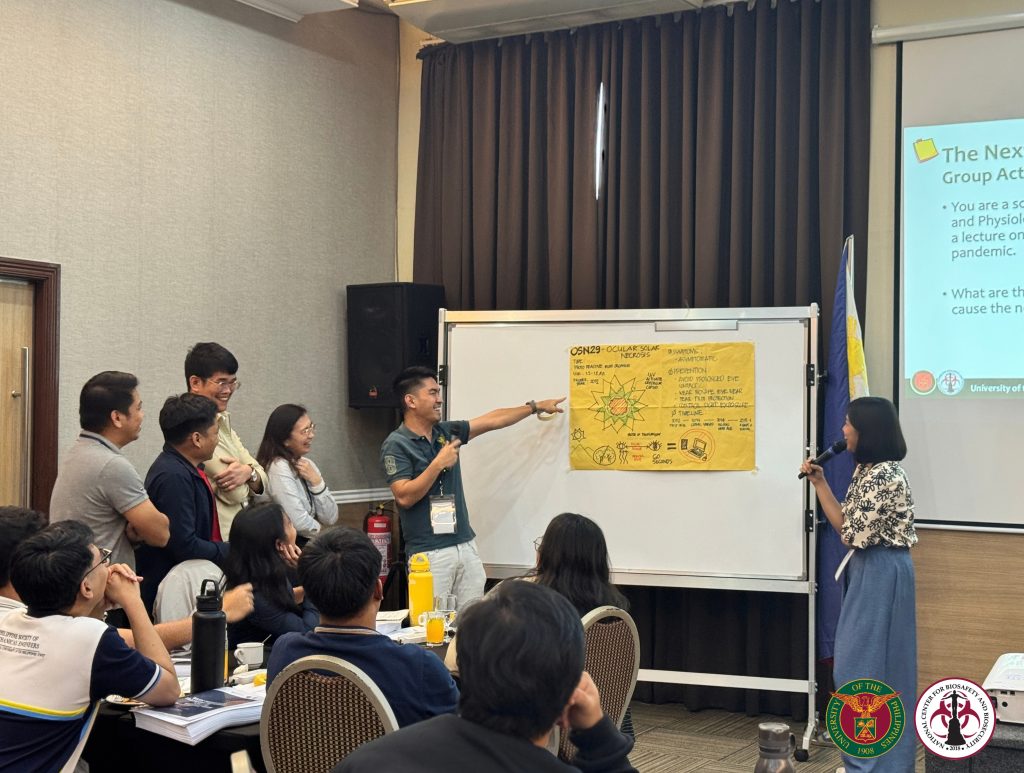
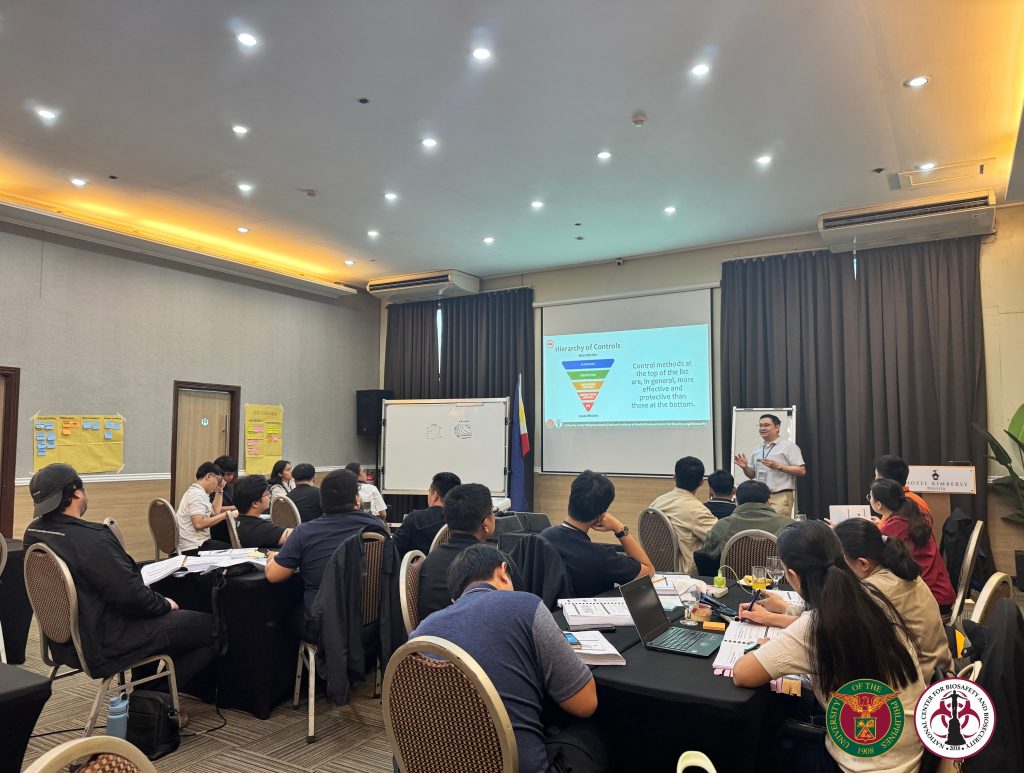
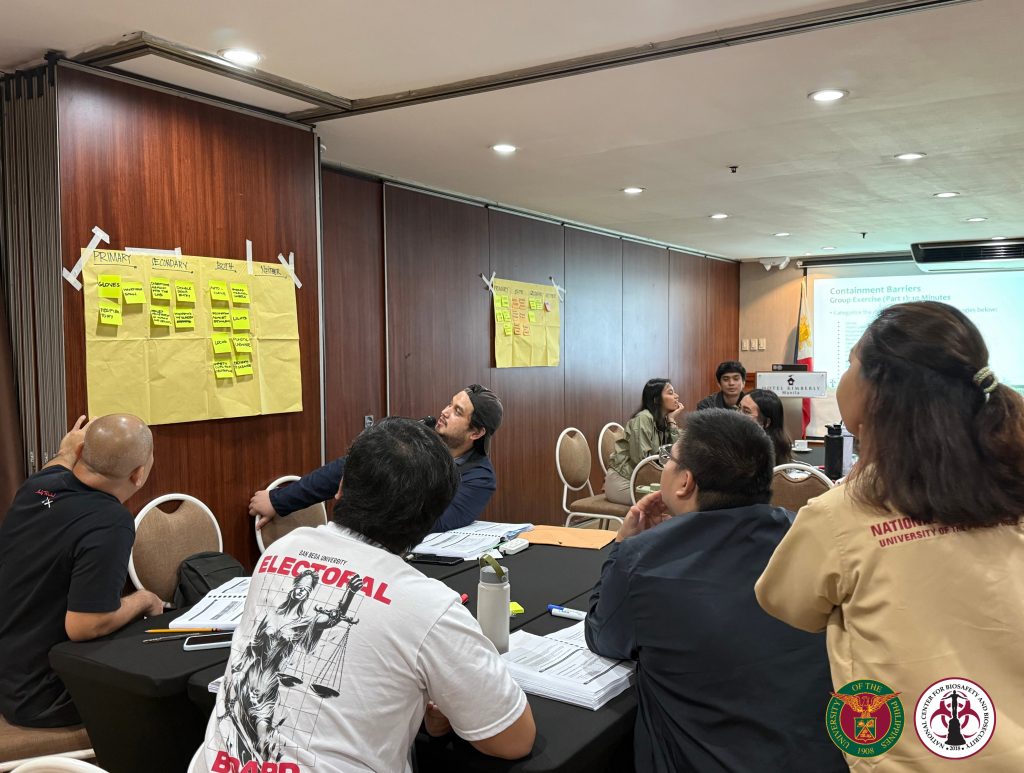
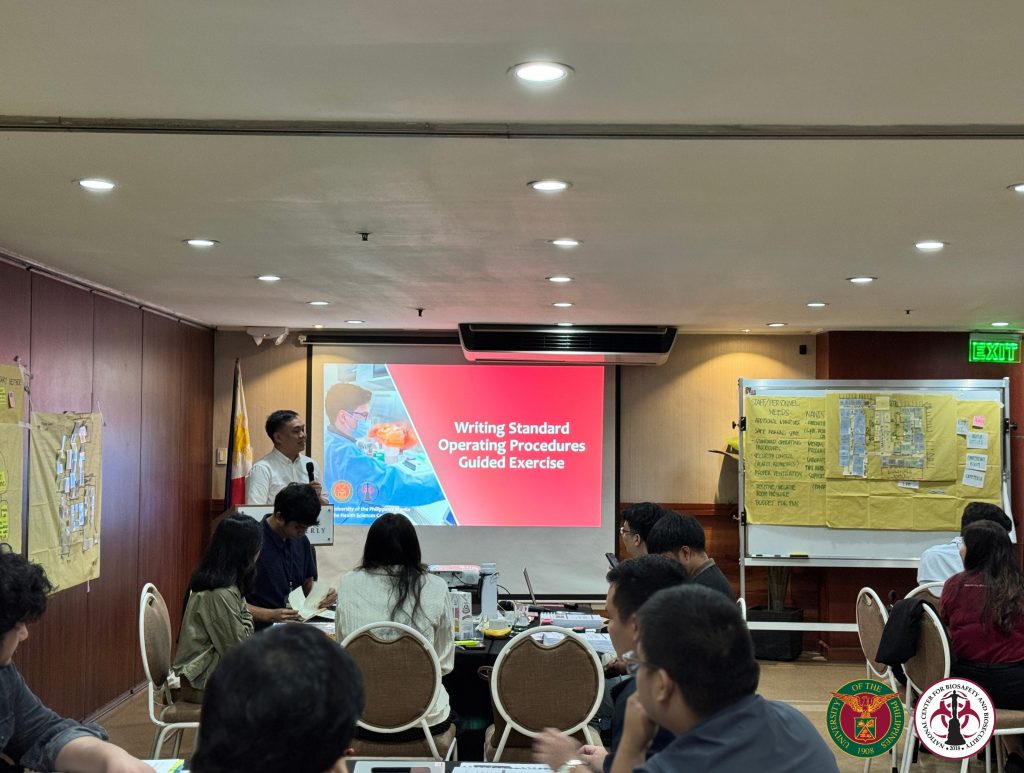
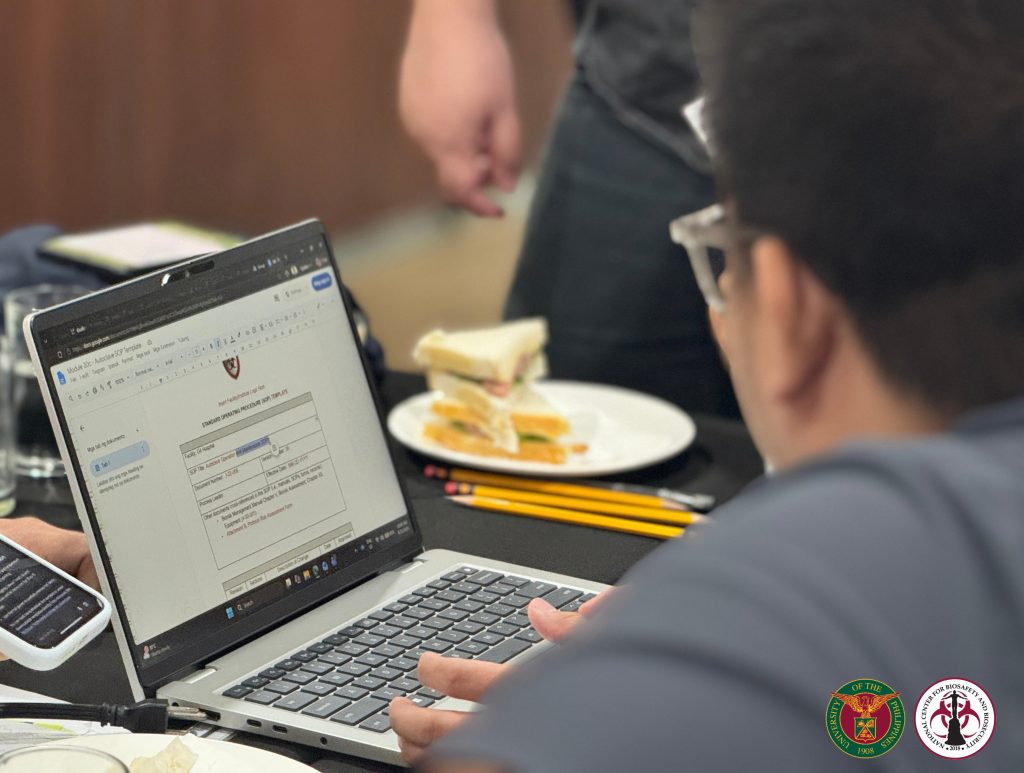
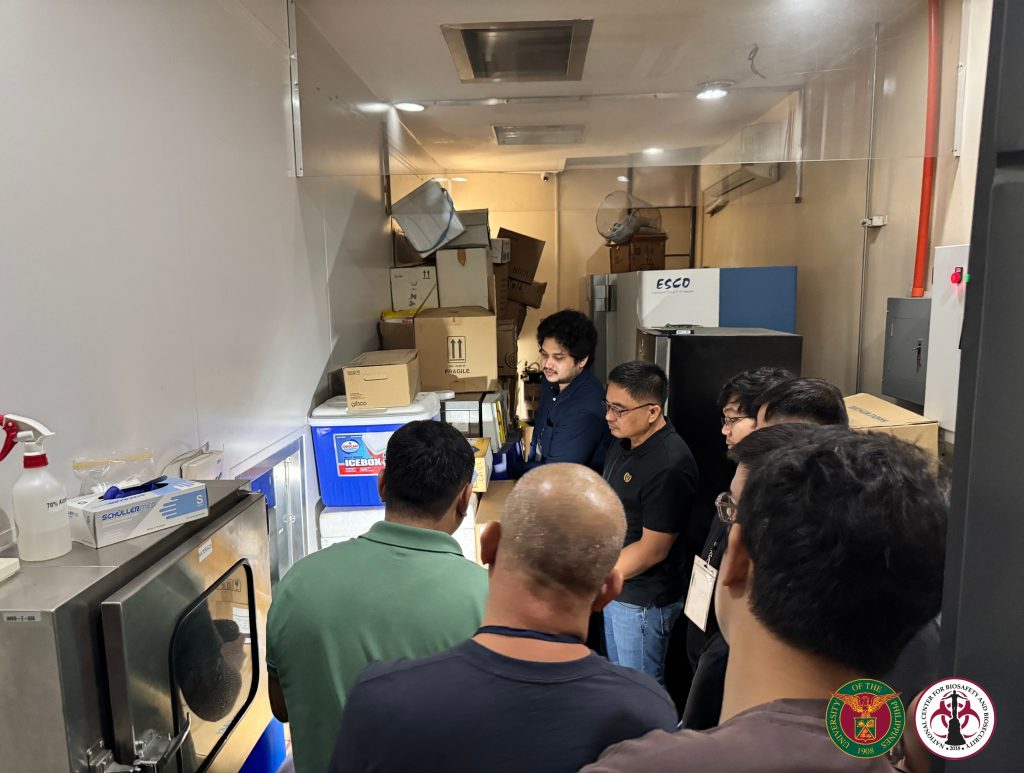
The training provided participants with foundational and applied knowledge on biosafety and biorisk management and their integration into biomedical engineering and laboratory facility operations. Topics covered included biological risk assessment, risk control measures, engineering controls, laboratory infrastructure and facility features, ventilation systems, biosafety cabinets, applicable building frameworks and standards, facility management, and the operation, maintenance, and management of critical laboratory systems and equipment. Participants also engaged in practical learning activities, including a BSL-3 laboratory visit at the University of the Philippines Manila National Institutes of Health and guided exercises on developing standard operating procedures for laboratory equipment and systems.
The training was delivered by NCBB faculty consultants and technical experts from various disciplines, including Dr. Rodel Jonathan S. Vitor II, Dr. Toni Lamata-Porras, Dr. Reynand Canoy, Dr. Gianne Ulanday, Angelo Dela Tonga, Engr. Melody Jane Roio, Engr. Sherwin Ocampo, Mr. Frederick Navarro, Dr. Rohani Cena-Navarro, and Engr. Ricardo Bote, Jr. Their expertise supported the delivery of the training modules, combining principles of biosafety and biorisk management with technical considerations in engineering, laboratory infrastructure, facility systems, and equipment management.
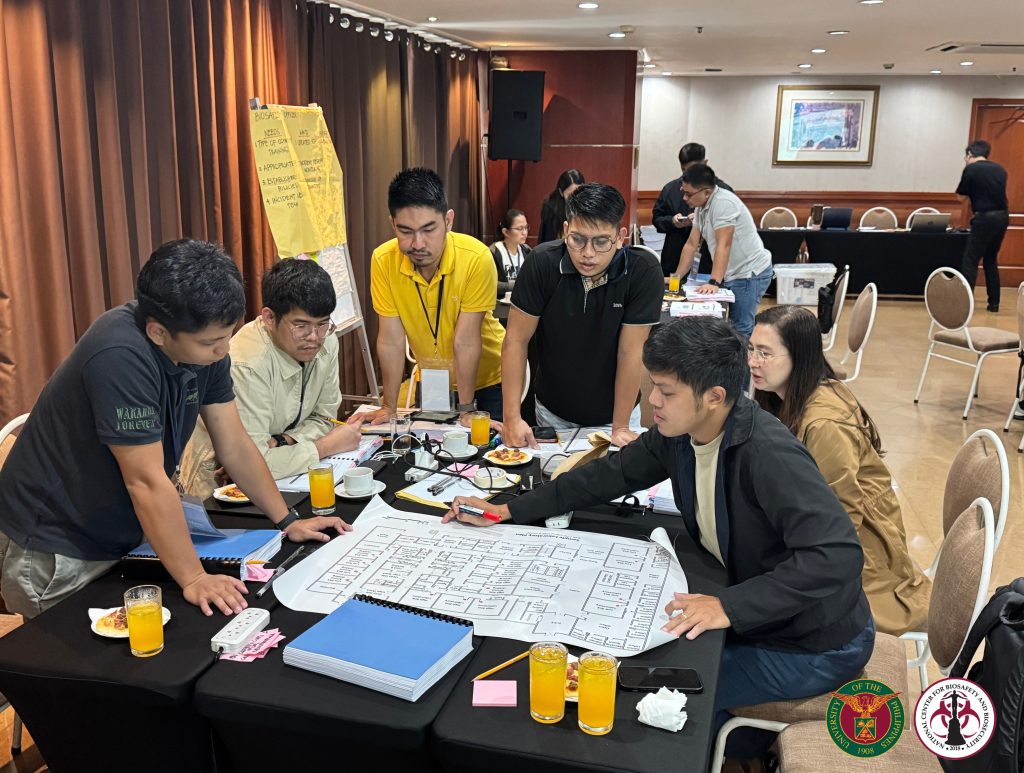
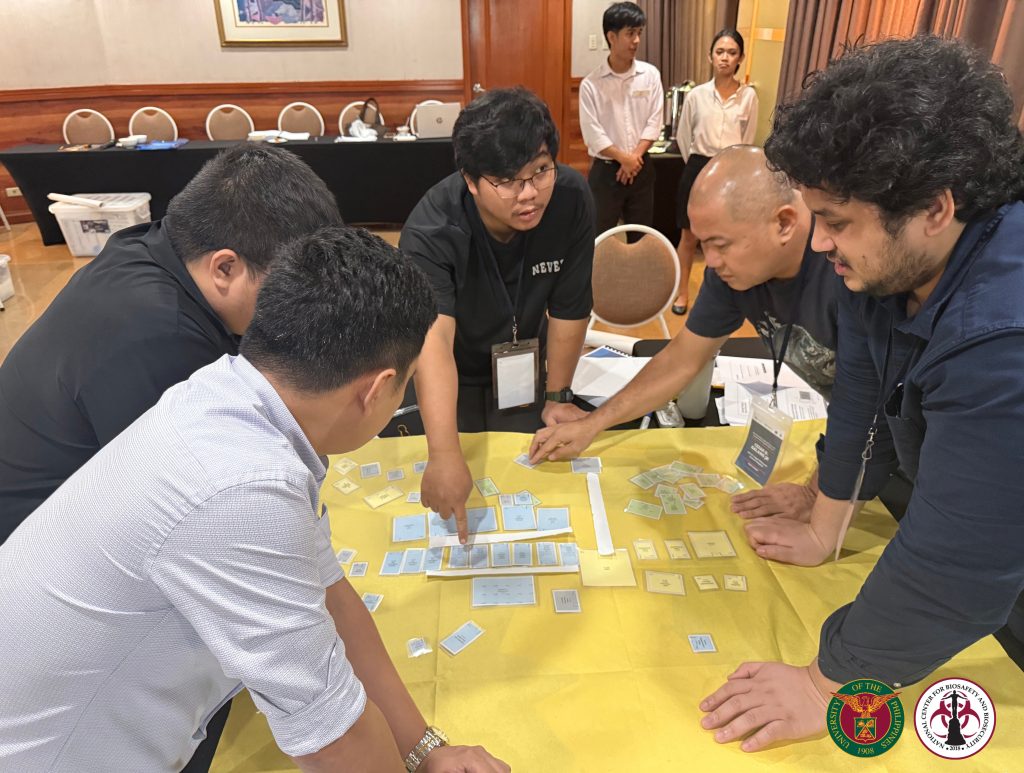
The Biomedical Engineering Facility Team Training forms part of the NCBB’s continuing efforts, in partnership with EpiC-GHS, to develop a competent biomedical engineering workforce capable of supporting the safe, reliable, and sustainable operation of laboratories and biocontainment facilities. Through targeted capacity-building initiatives, the NCBB seeks to strengthen the integration of biosafety and biosecurity considerations into facility design, engineering systems, maintenance, and operations, while promoting alignment with relevant national and international standards.
The training contributes to broader efforts to strengthen biosafety engineering competencies and support safe and sustainable laboratory operations in the Philippines, particularly by building the technical capacity of professionals responsible for critical laboratory and health facility systems.